
Will a Shop Install Your Itasha Wrap Kit? A Pre-Order Checklist
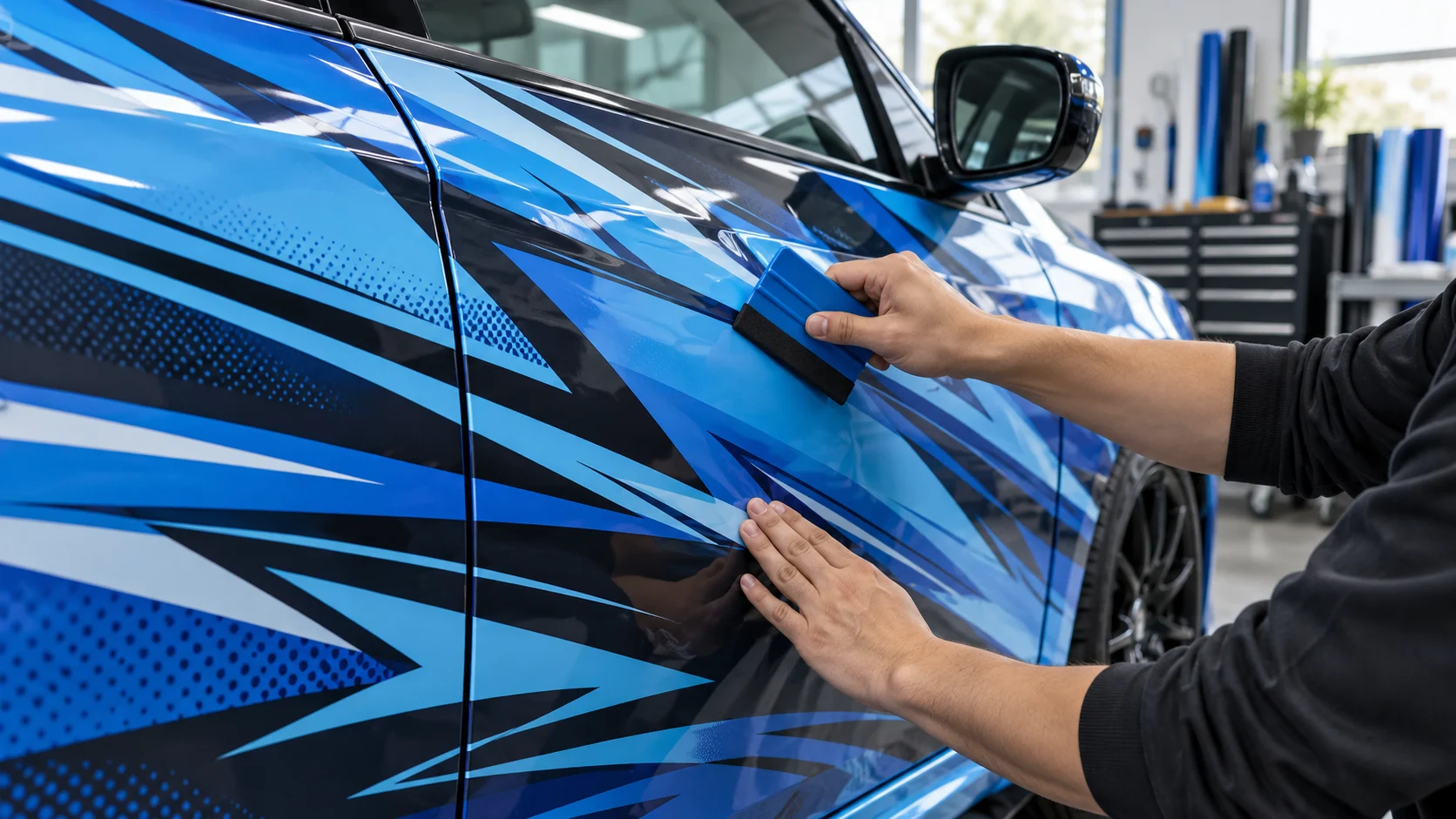
Some wrap shops install customer-supplied printed graphics, but acceptance of your particular itasha kit needs confirmation before you buy it. Ask about the actual material and print format, your vehicle, the proposed layout and the labor scope. A shop agreeing to discuss a project is not the same as accepting an unseen kit.
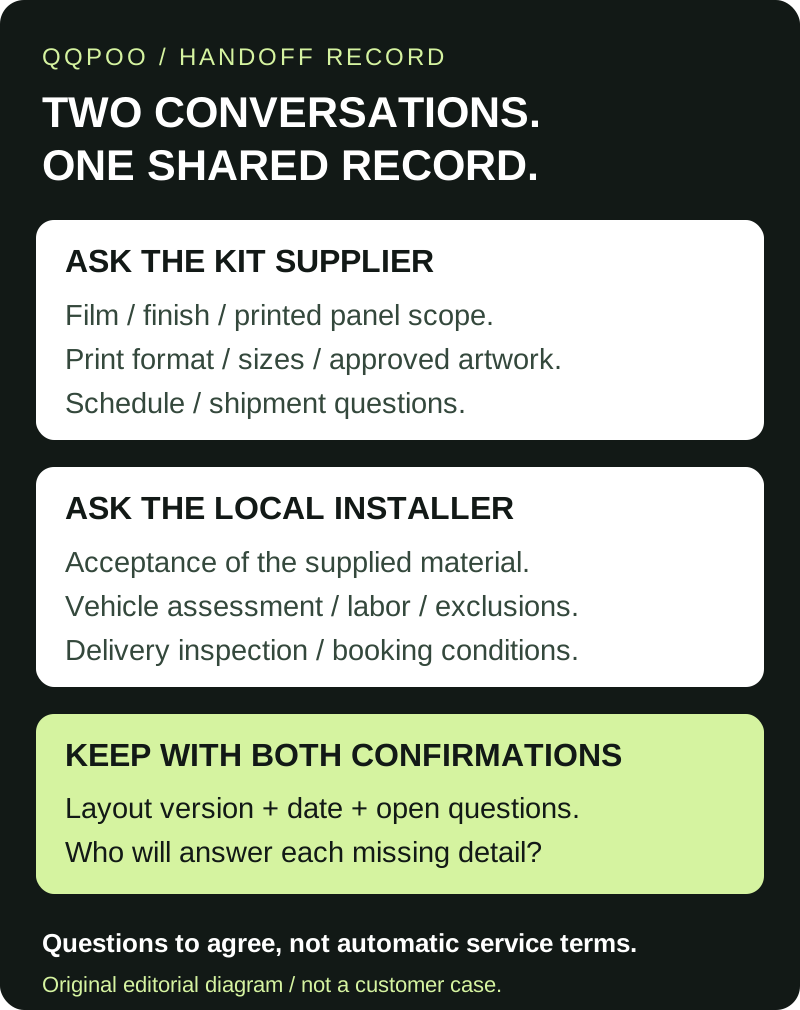
QQPOO supplies wrap kits and custom design; local installation is arranged separately. Use this pre-order checklist to connect the kit supplier’s information with the local shop’s requirements. For the later delivery, application and care stages, see the installation and care guide.
First ask whether the shop accepts outside printed graphics
Describe the job as installation of a customer-supplied, printed character wrap. Explain whether you are considering a catalog design or custom artwork. Ask whether the shop will review that project before printing, and what information it needs to decide.
Install-only services do exist: Wrapco’s published installation service discusses customer-supplied wraps. Separately, Car Wrap Solutions’ FAQ asks customers to submit the material and layout details for individual review. These are examples of shop-specific processes, not QQPOO partners or recommendations for your project.
Ask to see relevant printed-graphics work. In an itasha layout, a face or a word can cross a door break, handle or wheel arch. Discuss how the shop will review those details, rather than assuming experience with a single-color wrap answers every placement question.
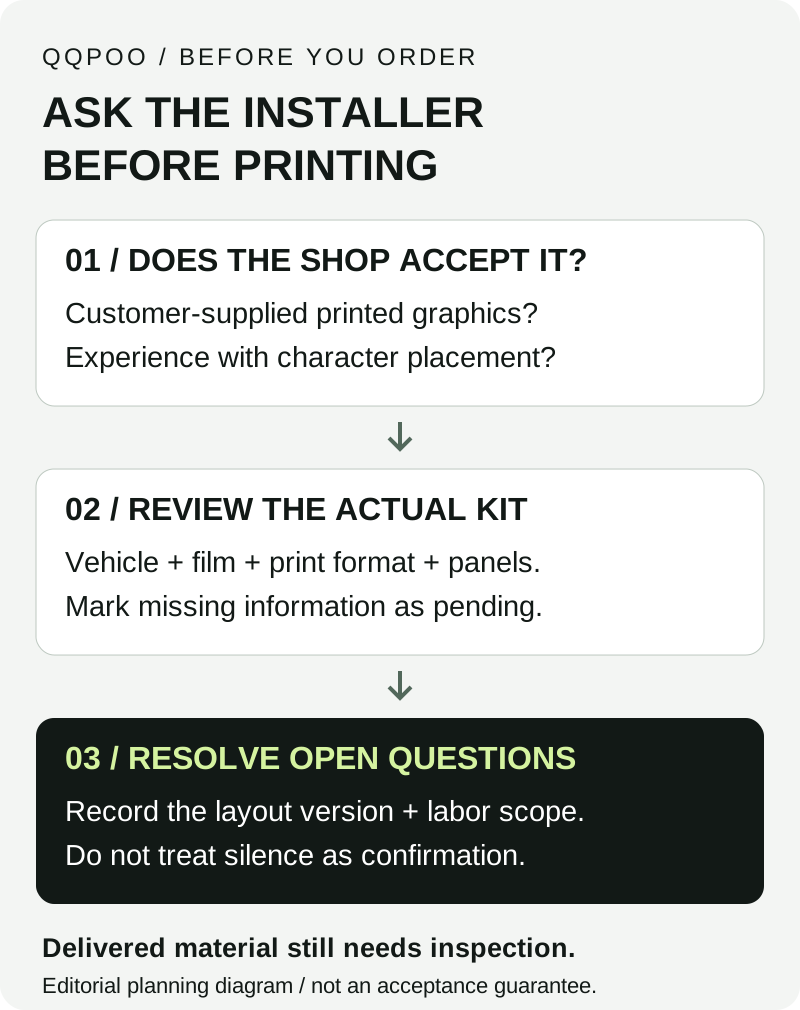
Send one review pack, with unknowns clearly marked
A product image is a useful starting point, but it is not a complete installation brief. Keep these items together so the installer and supplier discuss the same vehicle and artwork:
- Vehicle: make, model, production year and body style, with current photos. Identify body kits, changed bumpers, spoilers and other relevant modifications.
- Surface history: tell the installer about repairs, repainting, existing graphics or coatings. Ask whether an in-person assessment is needed; photographs do not settle every surface question.
- Design reference: product code or proposed artwork, both-side previews when available, and the version/date being reviewed.
- Printed scope: the agreed panel list, expected print format and dimensions available from the supplier. Ask whether the installer needs additional information about alignment, trimming or allowances.
- Material: the actual film, finish and any laminate or application documentation available for that order. Mark anything not yet confirmed as pending.
Do not substitute a familiar film brand or material description when the supplier has not confirmed it. QQPOO’s custom-service specification does not establish the material of every catalog listing. If the installer cannot evaluate the proposed material, take that specific question back to the supplier before production.
The coverage checklist handles panel-by-panel scope. The design brief helps collect artwork inputs; this installer pack focuses on whether and under what conditions a local shop can take the work.
Get an installation quote with inclusions and exclusions
Ask for a quote tied to the vehicle and supplied kit, rather than a generic full-wrap estimate. Clarify which preparation, existing-wrap removal, trimming, finishing and component removal or refitting are included, if applicable. Let the installer determine the appropriate methods; do not instruct it to use a generic procedure from a blog.
Ask what would require a revised quote after inspection. Also ask what workmanship terms the shop offers for customer-supplied material and what the kit supplier’s own terms cover. Record whom to contact if a panel appears damaged, undersized or different from the agreed artwork. Do not assume either party automatically pays for replacement printing or additional labor.
Keep the installation quote separate from the kit quotation. Use the cost guide to distinguish design, printing, delivery and local labor, without adding unrelated service fees to a catalog price.
Copy this pre-order message for your installer
Replace the prompts with your details. Keep unavailable information marked “pending” instead of guessing.
Project: installation of a customer-supplied printed itasha kit.
Vehicle: (make / model / year / body style / modifications).
Supplier and reference: (QQPOO product code or custom-design reference).
Layout version: (file or preview name / date / pending).
Panels and print format: (agreed list / dimensions / pending items).
Material documentation: (confirmed film, finish and available instructions).
Vehicle condition: (repairs, repainting, existing wrap or coatings to discuss).
Please confirm: Do you accept this supplied kit? What else do you need before printing? What labor and preparation does your quote include, and what is excluded? What conditions apply to booking, delivered-material inspection and workmanship?
Record the answer before moving to production
Keep the shop’s reply with the supplier’s scope and your artwork approval record. Note what the installer reviewed, any remaining conditions, who will answer each open question and the relevant dates.
For example, if the shop says “we can quote once we know the film and panel sizes,” the next step is to obtain those details. It is not yet an unconditional acceptance. This is a hypothetical communication example, not a QQPOO customer case.
After printing and delivery, have the material checked against the agreed record before application. If something does not match, pause and ask the relevant party how to resolve it before cutting or using the affected material. Follow the actual order and installer terms.
Two booking questions to settle
Can I book a fixed install date before the kit arrives?
Discuss a provisional schedule with the shop, but confirm delivery expectations and its inspection requirements before making the appointment firm. Design, printing, dispatch, transit and installation are separate stages. Share an event date as a constraint; do not treat it as an agreed delivery promise.
Does accepting the design mean accepting the delivered kit?
No. A layout review does not verify the condition, quantity or dimensions of material that has not arrived. Ask the installer to explain its arrival inspection and what happens if an issue prevents the planned work.
Start with the right kit information
If you already like an existing design, browse QQPOO’s wrap catalog and send the exact code with your vehicle details. If the artwork needs a new direction, use custom design. Still choosing? Read premade versus custom itasha wraps, then bring the proposed kit details to your local installer before production.