
Premade vs Custom Itasha Wrap: Which Should You Choose?
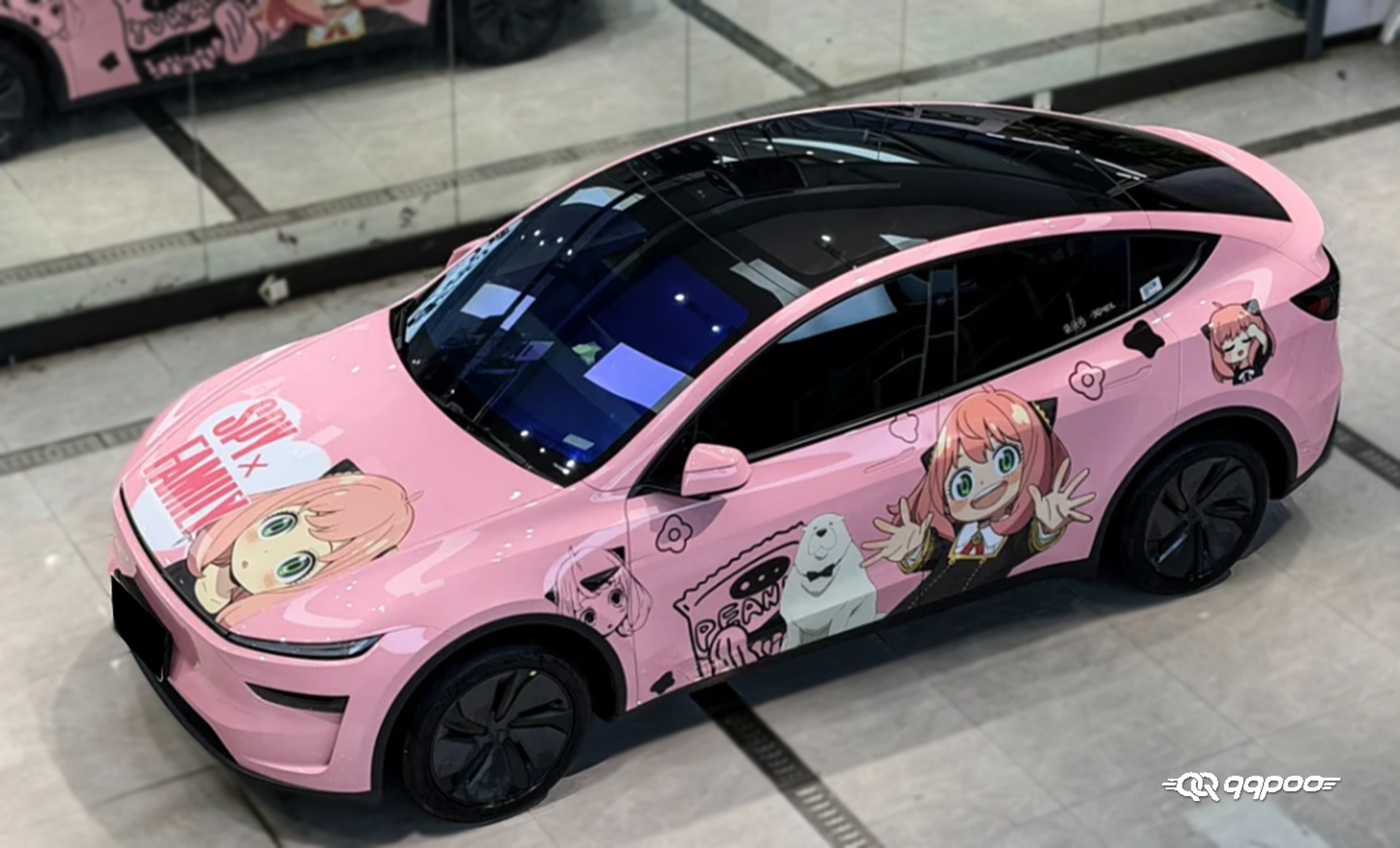
A premade itasha wrap starts with an existing character and visual composition. A custom itasha wrap starts with a design discussion around the character, artwork and layout you want. Choose the starting point by deciding which parts of the design you need to keep or change, then confirm the vehicle and printed scope before ordering.
At QQPOO, “premade” in this guide means a catalog design. It does not, by itself, confirm a pre-cut kit, immediate dispatch or compatibility with every car. The product listing and the agreed order details determine what you are buying.
The short answer: which route should you choose?
- Start with a catalog wrap when you already like its character, colors and overall composition.
- Ask about an adjustment first when you want the same theme with a limited change, such as a different color. Send the product code and ask what is feasible and whether it changes the quotation.
- Start a custom-design inquiry when you want a different character, a different theme or a composition built around your own priorities.
None of those choices replaces a vehicle check. An existing design still needs discussion around your exact car, body style, modifications and intended panels.
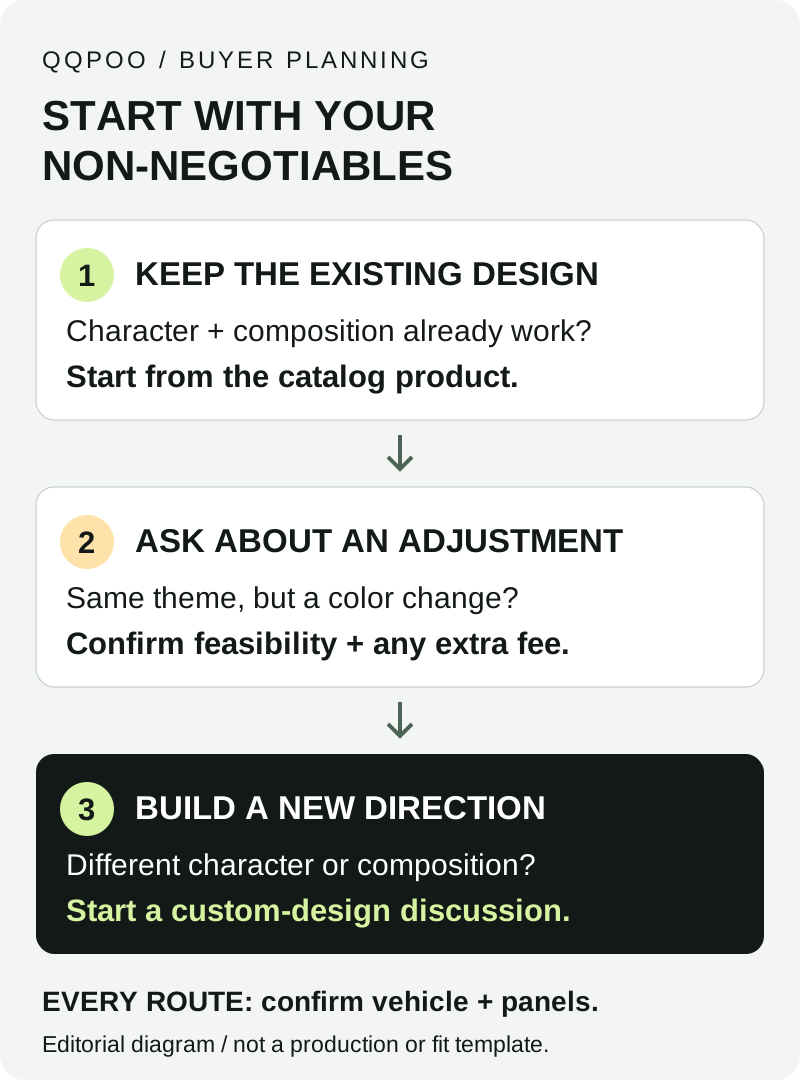
Premade versus custom: compare what you are deciding
Character and composition
With a catalog design, you can evaluate an established visual direction before contacting the team. For example, Anya AW-193 provides a pink SPY x FAMILY reference with Anya and Bond. The useful question is whether that direction already matches what you want, rather than whether a listing can be turned into any other design.
If you want another character or a substantially different composition, use the custom-design service. Prepare references that explain the desired pose, colors and placement. Supplying a reference does not establish permission to reproduce it or suitability for large-format printing; explain its source and ask about usable artwork.
Vehicle layout
A catalog image shows the design on the pictured vehicle. It is not proof that the same face, lettering or background will sit in the same place on another body shape. Send the make, model, production year and current photographs, and identify body kits or other changes before treating either route as ready to print.
For a custom route, use those same details to explain where important elements should sit. Review both sides before approval. The coverage guide handles the detailed panel list; the proof-approval record helps document the agreed version.
What the price includes
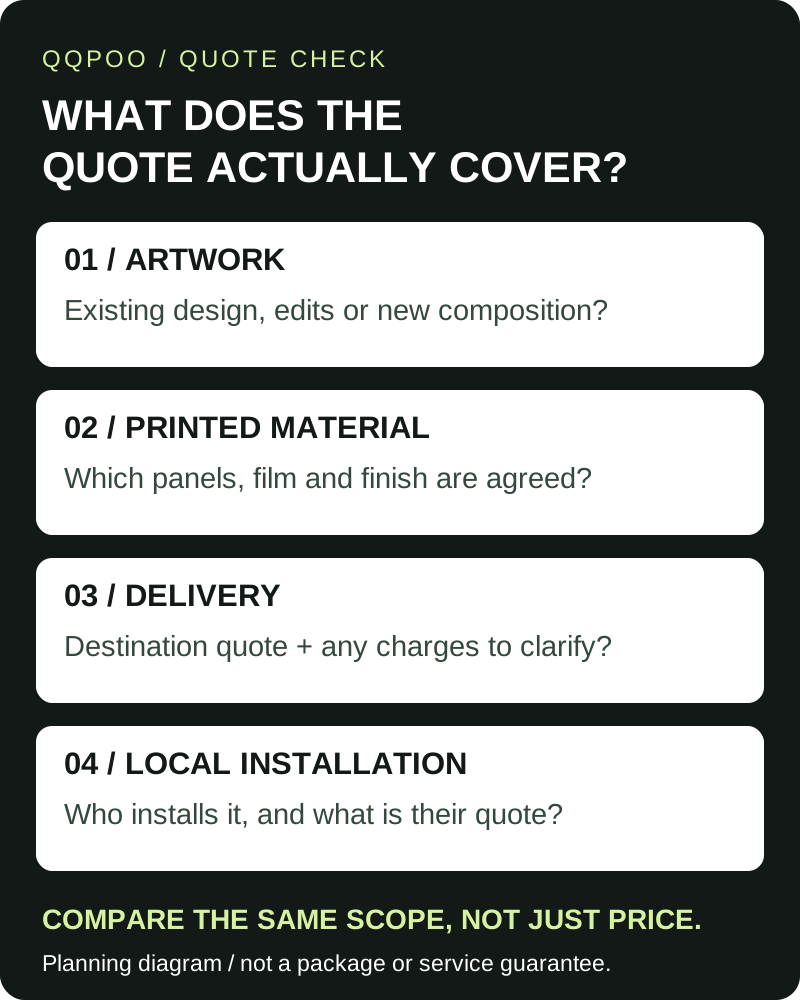
Compare the actual scope of the two options. Do not add custom-design and printing fees to a catalog price automatically. Ask what artwork work, printed material and delivery are included in the specific quotation. QQPOO’s local installation is not included; arrange and price that work with your installer.
Use the cost guide for the separate budget components and the current custom-service figures. A lower headline price is not enough to compare two offers if one covers design only and another includes printed material.
Three examples of how to choose
These are hypothetical planning examples, not customer projects or confirmed quotations.
- “I want the pink Anya design shown in the catalog.” Start with AW-193 and send your vehicle details. Ask about the complete layout and printed scope before ordering. A catalog route gives the conversation an exact product reference.
- “I like that design, but I want a different background color.” Send the code and describe the proposed change. Ask whether it can remain an adjustment to the existing artwork, what changes in the proof, and whether an extra fee or schedule change applies. Do not assume the edit is included.
- “I want another character, with a specific pose and a simpler hood.” Start a custom inquiry and list those details as priorities. Comparing only the nearest catalog photo would leave the main design decisions unresolved.
If you cannot decide yet, separate your requirements into “must keep,” “can change” and “open to suggestions.” That gives the team a clearer way to recommend a starting point than a request for “something similar.”
Copy this message to compare the two routes
This short comparison request helps you choose a route. Once you have chosen custom design, use the fuller design brief template to prepare the artwork inputs.
Vehicle: (make / model / year / body style / modifications)
Catalog reference: (product code and link, if any)
Must keep: (character / colors / pose / other details)
Changes requested: (specific differences from the reference)
Panels wanted: (list, with anything still uncertain)
Destination: (country and postal code for delivery discussion)
Installer: (already chosen / still looking)
Please confirm: Can this use the catalog design, does it need an adjustment, or should it start as custom? What artwork work, printed material, delivery and timing does the quotation cover?
Questions worth resolving before payment
Does premade mean it fits any car?
No fit conclusion follows from the word alone. Confirm your exact vehicle and the proposed layout. Also ask about the supplied format and any trimming or finishing your installer expects; do not assume “premade” means pre-cut.
Can I change the character on a catalog wrap?
At QQPOO, a different character or theme belongs in a custom-design discussion. Reference the catalog product to explain what you liked, but ask for the new scope rather than assuming it is a free variation.
Is custom always faster, cheaper or exclusive?
Those are separate questions to confirm. Do not infer delivery speed, a lower total cost, exclusive rights or editable-file delivery from “custom.” Check the specific design agreement and quotation before deciding.
Choose your next step
If a current design already works for you, browse the catalog and keep its product code with your vehicle details. If the central artwork needs to change, start a custom-design inquiry. In either case, settle the layout and scope first, then plan delivery and local installation.