
Itasha Design Brief: What to Send Before a Custom Wrap
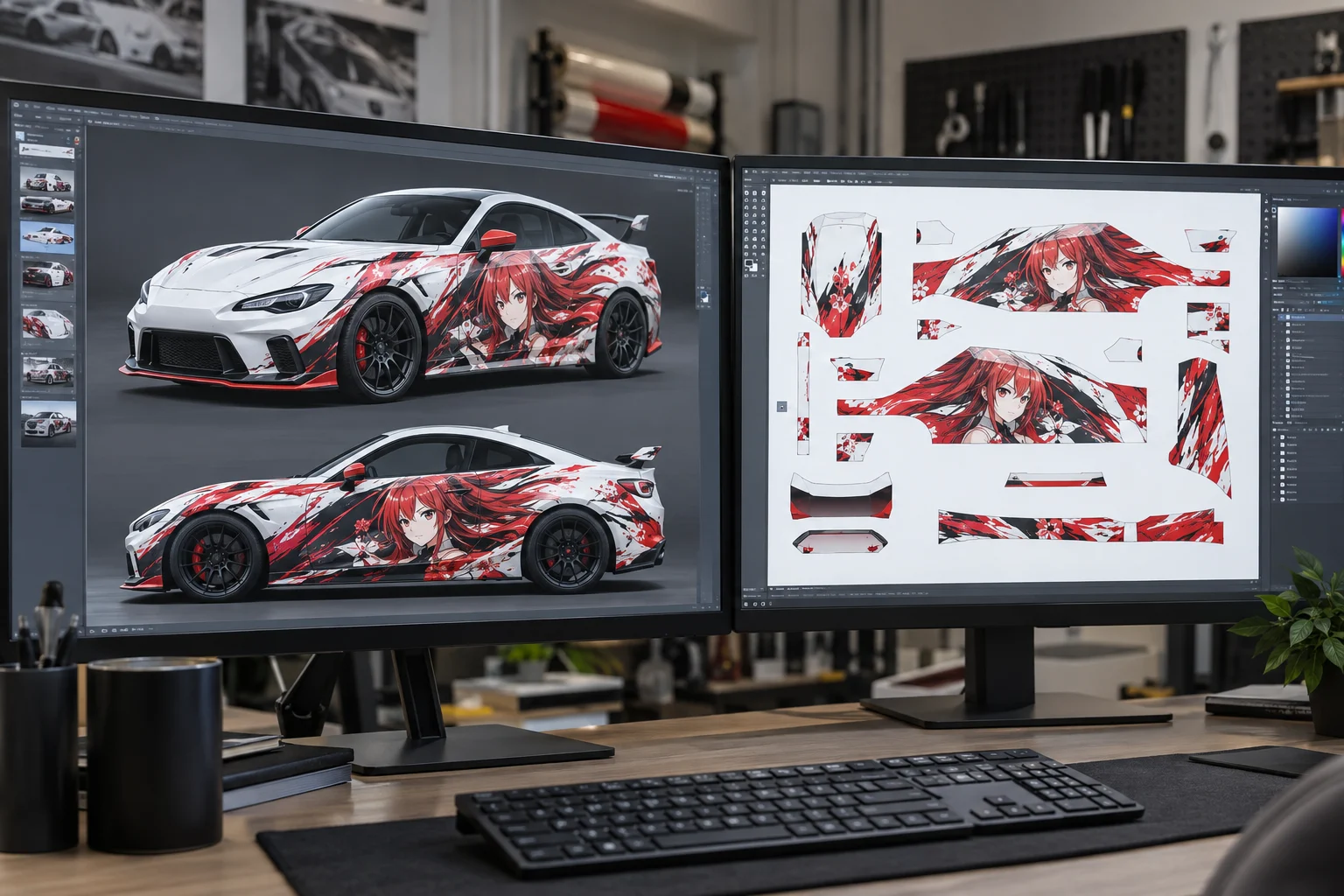
An itasha design brief gives your designer the vehicle details, character references, panel coverage and practical limits needed to discuss a custom wrap. Start with your car’s make, model, year and body style, then add current photographs and a clear description of the artwork you want.
Use the checklist and copyable brief below when contacting QQPOO. It helps separate your must-have details from ideas you are still exploring. For current service scope and pricing, see custom itasha design.
What should you send an itasha designer?
- Your vehicle make, model, production year and body style.
- Current photographs of both sides, the front and the rear.
- The character or theme, reference images and what you like about each reference.
- The panels you want covered, preferred colors and details that must stay visible.
- Your budget, delivery country and any event date you are working toward.
- Information about body modifications and the local installer you plan to use, if known.
Identify the exact vehicle before discussing the layout
Give the production year and body style as well as the model name. A hatchback and sedan can have different rear panels and door shapes. If you have changed bumpers, added a widebody kit or fitted a spoiler, describe those changes and include photographs.
Tell the team which modifications are already fitted and which are planned. If the bodywork will change before installation, the layout needs to be discussed around the final vehicle configuration. A generic car outline can help explain your idea, but the agreed layout must relate to your actual car.
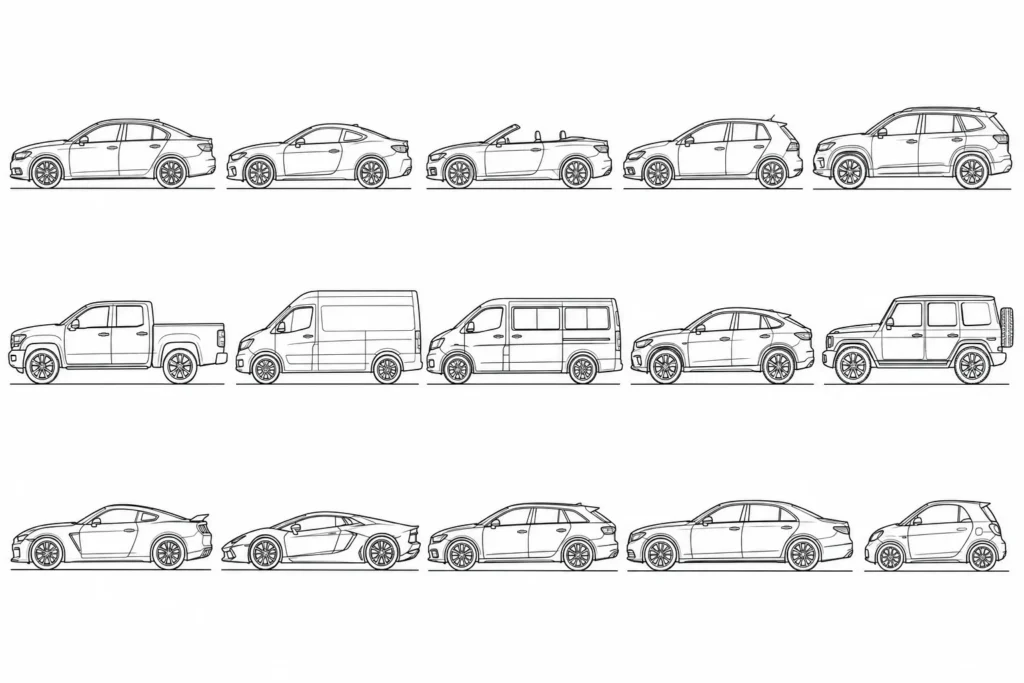
Take photographs that explain the car
Photograph the whole vehicle from each side, then take front and rear views. Use enough light to show panel edges, handles and body changes. Add close-ups of unusual trim, repaired areas or features that could affect the layout. Your local installer should assess surface condition before application.
Keep filters and visual effects out of these reference photos. The useful information is the shape of the car and the details around it. You can crop unrelated personal information before sharing. Ask the team whether additional measurements or photographs are needed; a few pictures do not establish a precise print template on their own.
Explain the character, colors and placement priorities
State the character’s name and the anime, manga or game. If a particular outfit, expression or pose matters, identify it. With each reference, explain the feature you want to carry into the design: the color palette, background pattern, character scale or lettering.
For example, “I want this turquoise and white palette, with the face on the rear door and the hood kept visually simple” gives the designer a specific starting point. Sending several unrelated pictures with “something like this” leaves more decisions unresolved.
If you supply artwork, tell the team where it came from and what permission you have to use it. Ask the designer which files are suitable for production before treating a small preview as a print asset. The printing checklist explains the next artwork and proof checks.
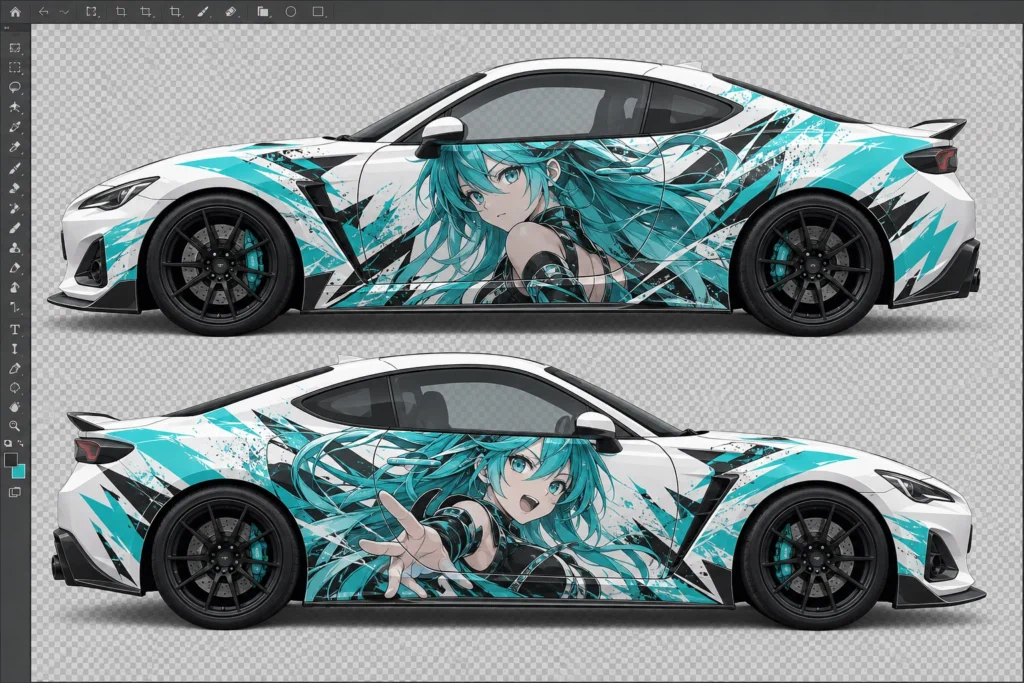
List the panels instead of relying on “full wrap”
Write down the left and right sides, hood, roof, front and rear bumpers, and trunk or hatch. Mark each area as wanted, excluded or still to be confirmed. Ask separately about mirrors, spoilers and small trim pieces.
Identify details that must remain readable or unobstructed. Discuss character faces near door handles, lettering across panel gaps and areas your installer needs to keep clear. Both sides of the vehicle need review. Use the panel coverage checklist to turn the discussion into a written scope before production.
Include your budget, destination and timing
Say whether your budget is for design only, the printed kit, or the complete project including shipping and local installation. QQPOO’s current custom offer lists design at $200–$300 USD and full-car printing at $499 USD. Shipping is confirmed separately, and installation is arranged locally. Confirm the final scope and quotation before paying.
The current design service includes three revisions, including one full theme change, and the stated design stage is 3–5 working days. Printing, dispatch and international transit are separate stages. Share an event date as a planning constraint and ask what schedule is feasible. Book installation after delivery timing is confirmed. The cost guide separates those budget components.
Copy this itasha design brief
Replace the example entries with your own details. “Please advise” is useful for anything you have not decided. This is a planning example, not a quote or a record of a customer project.
Vehicle: [make, model, production year, body style]
Current body color: [color]
Body modifications: [fitted parts and planned changes]
Photos: [both sides, front, rear and relevant close-ups]
Character and series: [name and source series]
Reference images: [files or links, with a note on each]
Artwork source: [where it came from and permission to use it]
Colors and visual direction: [preferred palette and background]
Must-have details: [pose, expression, lettering or placement]
Coverage: [panels wanted, excluded or to be confirmed]
Budget: [amount, currency and which costs it covers]
Delivery country: [country]
Target event date: [date, or flexible]
Installer: [already arranged, looking locally, or please advise]
Open questions: [anything the team needs to help decide]
Review the brief again when the proof arrives
Use the same brief to review the proposed layout. Compare the character, colors and panel scope against your must-have list. Collect related changes into one clear response, identify the exact area being discussed and ask how a proposed change fits the revision allowance.
Before approving production, confirm the vehicle, both side layouts, covered panels and final quotation in one record. Share the agreed plan with your installer and read the installation and care guide for shipment checks and preparation.
Send your design brief to QQPOO to discuss the next step. If an existing theme already suits your project, browse stock itasha wraps and include the product code in your message.